Hungarian officials have signaled they intend to drop their opposition to Ukraine’s EU membership bid, diplomats told POLITICO.
AI generated Text-to-speech
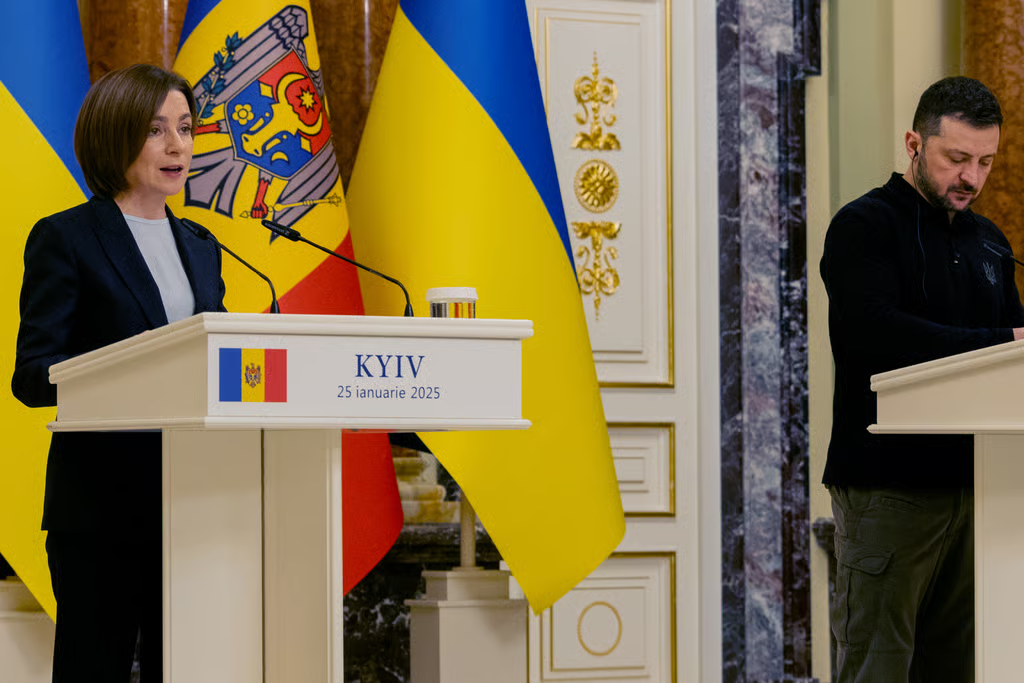
BRUSSELS ― Hungary has signaled it will drop its long-standing opposition to Ukraine’s bid for EU membership, allowing it and Moldova to begin formal negotiations to join the bloc in the coming days, four diplomats told POLITICO.
The opening of the first negotiating “cluster” — a formal step on the path to membership — is scheduled to take place during an intergovernmental conference in Luxembourg on June 15, three of the diplomats said.
Kyiv and Chisinau applied for EU membership at the same time, meaning that Moldova’s bid can only advance if Ukraine’s does too.
Budapest opposed Ukraine’s accession fiercely under former Prime Minister Viktor Orbán, but the country’s new leadership has privately signaled openness to lifting its veto following a meeting on Monday between Ukrainian and Hungarian experts on the matter of minority rights for Hungarians living in Ukraine, said the diplomats, who were granted anonymity to speak about a closed-door meeting.
A Hungarian official said that “no decision” had yet been taken on opening clusters for Ukraine. “Negotiations are ongoing. No agreement has been reached,” said the official, granted anonymity because the discussions are confidential.
During the meeting on Monday, the Ukrainian side provided assurances on how to resolve most concerns laid out in an 11-point plan originally prepared under Orbán, one of the diplomats said. Not all of Hungary’s requests can be immediately granted, but the diplomat added that Budapest’s approval was not contingent on passing new legislation in Ukraine.
Talks on Ukraine’s membership picked up pace after Hungarian Prime Minister Péter Magyar went to Brussels and met with top EU officials to discuss how to unlock €16.4 billion in frozen EU funds, said one of the diplomats.
The diplomat said that EU ambassadors would finalize their position on whether to open the first cluster for Ukraine and Moldova by the end of this week after Ukraine presents its plans for internal reforms as well as addressing the minority issue. EU countries would then approve the opening of the cluster for Ukraine and Moldova at the June 15 inter-governmental conference.
Opening clusters requires unanimous approval by all 27 EU member countries. Any country can block the process at any stage, either by opposing the first cluster or any of the subsequent steps on the path to membership.
Kyiv’s wartime leader aims to discuss defenses against ballistic missile attacks.
The bloc has carefully avoided any direct military role in the U.S.-Israeli conflict with Tehran.
The Hungarian leader has made the release of EU money central to his post-Orbán reset, but the Commission wants him to deliver on reforms first.
Foreign Minister Espen Barth Eide’s stance clashes with that of EU top diplomat Kaja Kallas.