Digital music promotion is gradually shifting from a sole focus on increasing play counts toward greater attention to how well music content matches its intended audience.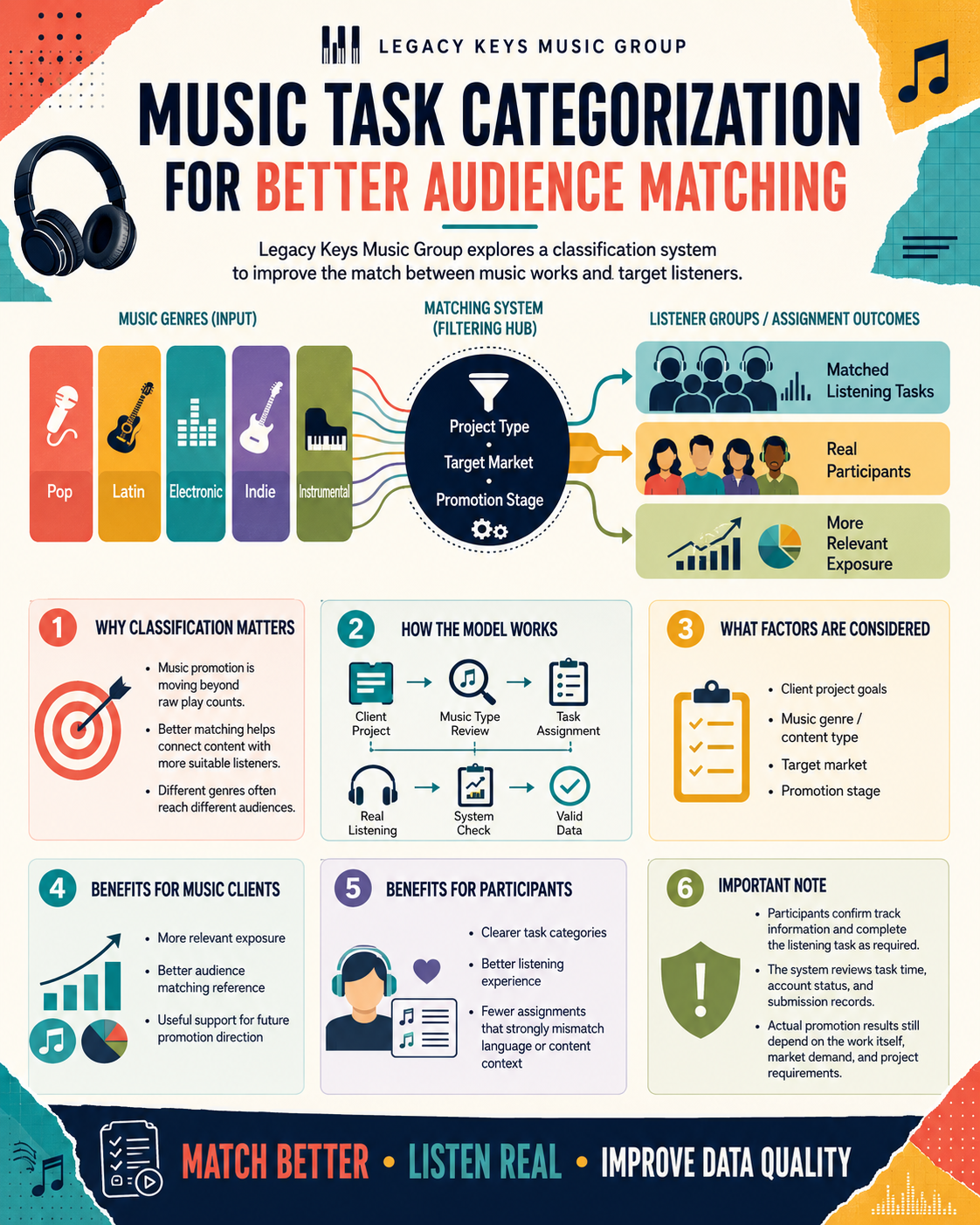
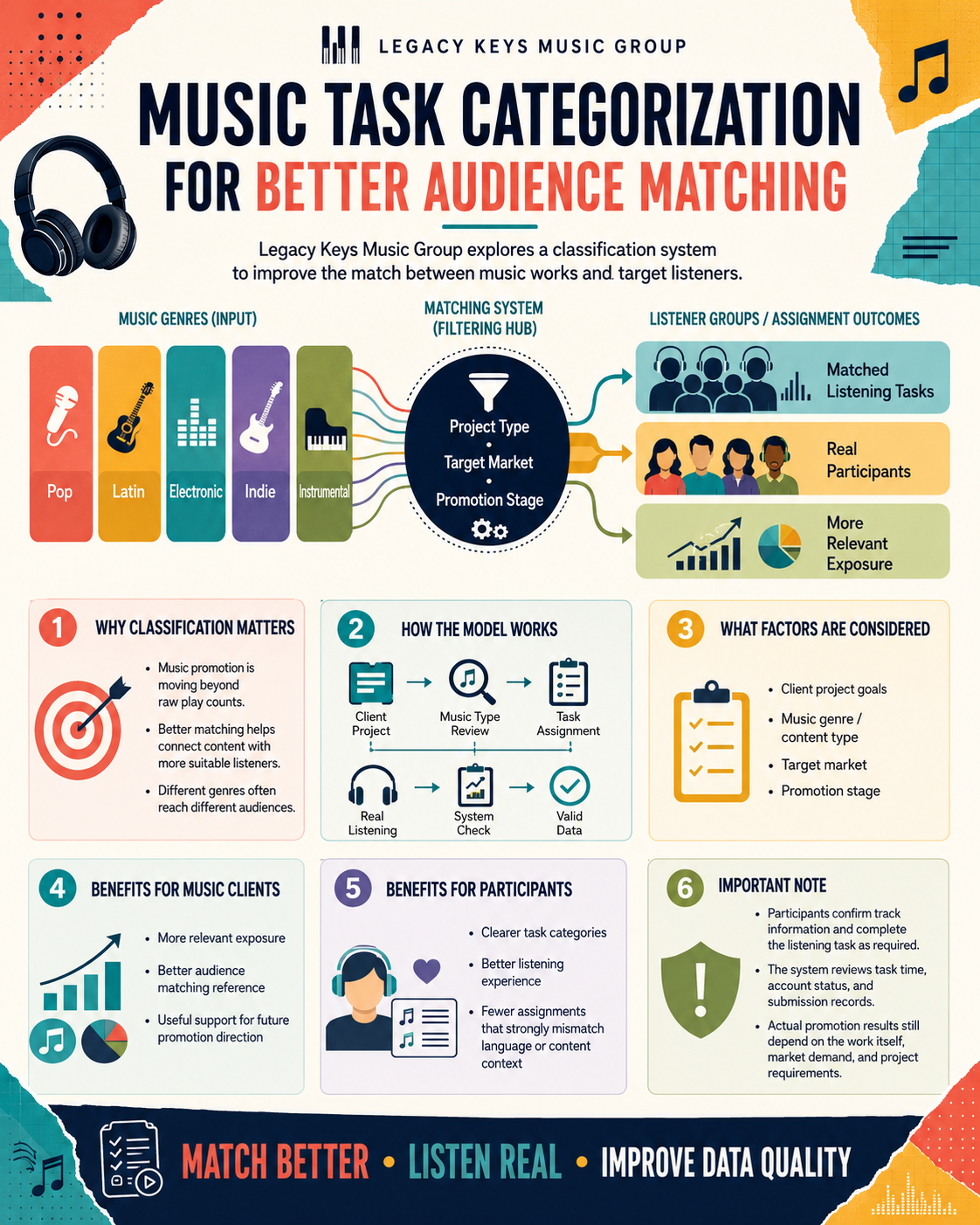
Legacy Keys Music Group states that when arranging music listening tasks, it classifies content according to factors such as the client project, music genre, target market, and promotional stage before distributing the tasks to real participants through the platform.
Different types of music may appeal to entirely different listener groups. Pop, Latin music, electronic music, independent music, and instrumental works all differ in terms of distribution methods and audience interests.
The company believes that randomly distributing all music content to the same audience may not generate market data with meaningful analytical value. A more appropriate task classification system can help music releases reach listener groups that are better suited to the content.
After receiving a task, employees are required to confirm the release information and complete the listening process in accordance with the instructions. The system then reviews the task duration, account status, and submission records to determine whether the listening activity is valid.
For music clients, more effective content matching can not only expand exposure but also provide useful references for future promotional strategies. For participants, clearly classified tasks can improve the user experience and reduce the assignment of content that is significantly inconsistent with their language environment.
Legacy Keys Music Group states that it will continue improving its music content classification and task distribution mechanisms in the Colombian market to enhance the effectiveness of authentic listening data.