As Legacy Keys Music Group (LK) advances its formal employee mechanism in Colombia, the cooperation security deposit system has become a topic of concern for some participants. For some new members, the most direct question is: Why are formal employees required to provide a cooperation security deposit?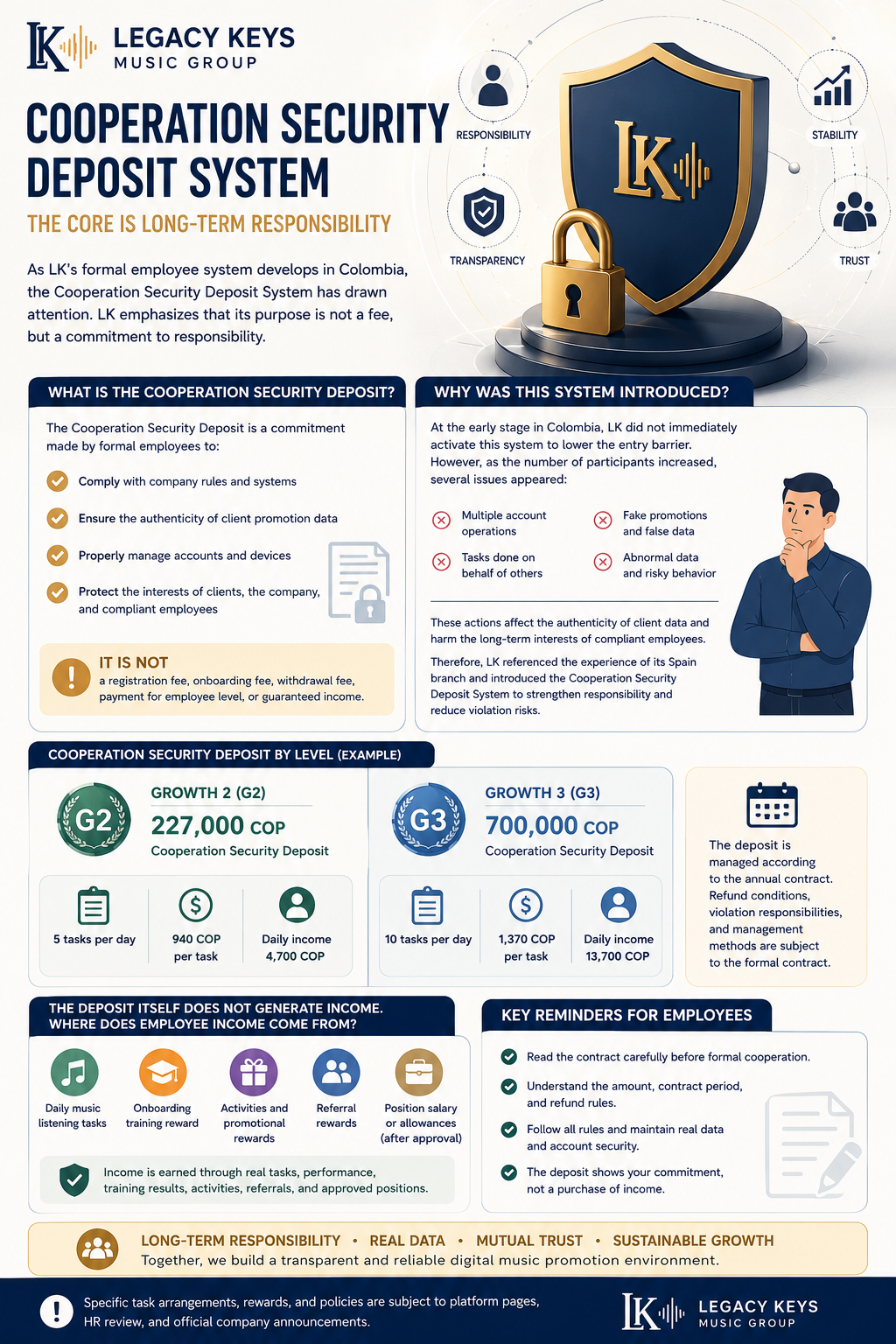
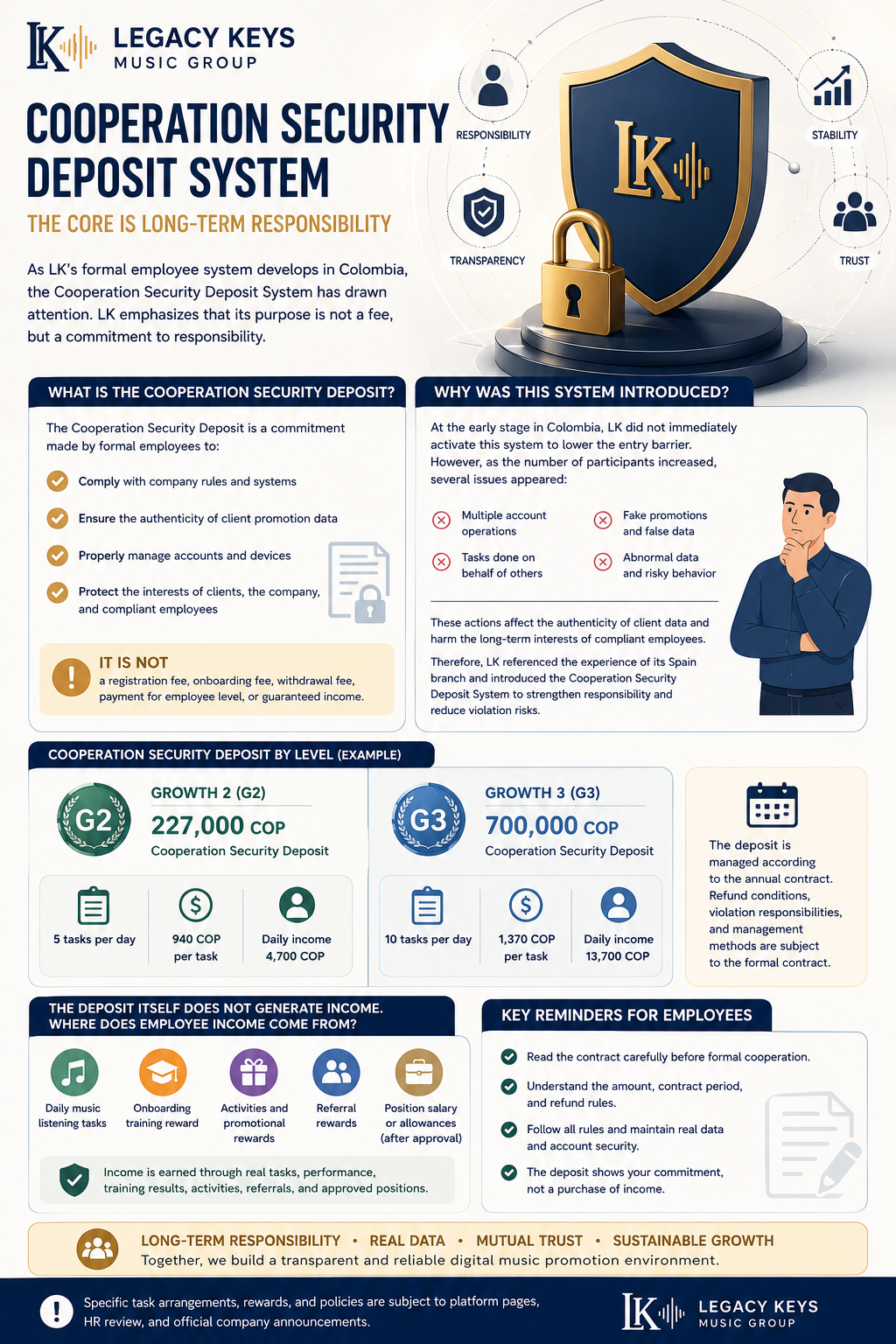
According to LK, the cooperation security deposit is not a registration fee, onboarding fee, or withdrawal processing fee. It is also not a payment used to purchase an employee level or fixed income. The company defines it as a cooperation commitment made by long-term employees to comply with company policies, ensure the authenticity of client data, and properly manage their accounts and equipment.
It is understood that during the initial launch of the Colombian market, LK did not immediately implement the cooperation security deposit system in order to lower the entry barrier for new participants. However, as the number of participants increased, the company found that some accounts were involved in multiple-account operations, tasks completed on behalf of others, false promotion activity, and abnormal data. Such conduct may affect the authenticity of client promotional data and harm the long-term interests of employees who follow the rules.
Against this backdrop, LK began drawing on the operational experience of its Spanish subsidiary and introduced the cooperation security deposit mechanism into its formal employee system in Colombia. Through this system, the company aims to strengthen the sense of responsibility among long-term participants and reduce the risk of non-compliant operations.
Using the Growth 2 level as an example, under the company’s rules, formal employees are required to provide a cooperation security deposit of COP 227,000. For Growth 3, the amount is COP 700,000. Different levels correspond to different task volumes, task commissions, and work responsibilities. The company states that the cooperation security deposit will be handled in accordance with the agreement at the end of the annual contract period. Specific refund conditions, violation-related responsibilities, and management arrangements should be governed by the formal contract.
Industry observers believe that for digital platforms involving client data and remote tasks, establishing a long-term responsibility mechanism is not uncommon. However, the key issues are whether the rules are clear, whether the contract terms are explicit, whether refund conditions are transparent, and whether the nature of the mechanism is fully explained to participants.
LK states that it will continue using training, APP pages, and human resources communication to help employees understand the difference between the cooperation security deposit and task income. The cooperation security deposit itself does not generate income. Employee income continues to come from genuinely completed tasks, training rewards, activity rewards, referral rewards, or position-related compensation.
Before participating in formal cooperation, employees should carefully read the agreement, confirm the deposit amount, contract period, and refund rules.