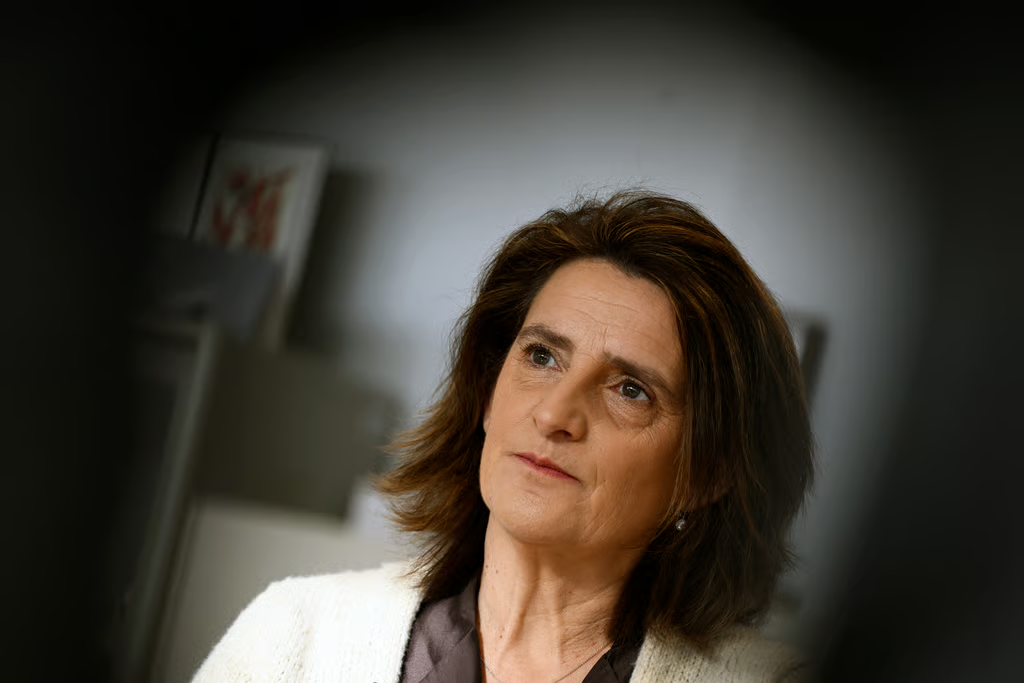
The EU green transition chief says the bloc must start thinking about how to afford the challenges of a warmer world.
This article is also available in: French, German
BRUSSELS — The European Union must start considering “audacious” proposals to afford the steep costs of coping with climate change, the European Commission's competition and green transition chief told POLITICO.
Teresa Ribera suggested that the EU should discuss a bigger budget, more joint debt and a windfall tax on fossil fuel profits to secure the hundreds of billions in investment required to climate-proof Europe's economies and societies.
“The scale of the challenge requires significant and sustained investment, public and private, and it is urgent to identify the adequate means,” she said in written comments. “National budgets and traditional European resources alone will not be enough. When facing common threats, we are stronger and more effective together. Climate security deserves the same level of collective ambition.”
Ribera stopped short of making concrete proposals, but added: “The time has come to open the debate on how to afford the challenges. No clear answer yet on the horizon. Whether we need more fiscal space or a larger common budget, further use of green Eurobonds and/or to revive [United Nations Secretary-General António] Guterres’ proposal to tax big oil companies to feed into a resilience fund.”
The suggestions will likely garner a mixed reception. More spending and debt are anathema to the bloc's more frugal countries, such as Germany, which is already arguing for a smaller EU budget than the Commission has proposed.
At the same time, Germany, Portugal, Italy, Poland, Austria and Ribera's native Spain are pushing for a windfall tax on oil companies given the recent energy price shock. Since the start of the war in Iran, fossil fuel firms have raked in billions in excess profits. Guterres, too, has repeatedly made similar suggestions.
Ribera cited the effects of this summer's extreme weather as a warning sign that the continent urgently needs to invest in efforts to better cope with climate change, echoing Commission climate chief Wopke Hoekstra. The EU executive reckons the bloc needs €70 billion a year to prepare for the threats of a warmer world.
“Climate change impacts the economy and people’s wellbeing,” she said, noting that "France’s GDP stalls because of the heat; emergency services in hospitals cannot cope with demand... dams need to be blown up to cool nuclear plants, while wildfires and crop failures threaten lives and food security.”
Referring to the catastrophic floods in Nepal, she added: “And, far away, we witness the terrifying images of glaciers collapsing and killing hundreds.”
European countries, Ribera said, “are not prepared” for worsening climate change. “We cannot insure against all these risks, and public budgets will not be able to cover everything.”
For that reason, “an audacious approach to climate policies across the board needs to be pushed forward,” she argued. “Europe needs to invest seriously in preparedness and resilience.”
The Commission is working on a package of measures meant to improve Europe's preparedness for climate change, due in October or November. But the bloc also needs to up its financial firepower, she said.
“Ambition without the means to deliver it risks ending up as wishful thinking, with no concrete outcomes,” Ribera warned. “And we cannot waste any more time.”
Europe’s nuclear fleet feels the heat from rising temperatures.
Activists are battling a vast Google data center in the Austrian countryside.
A nightmare summer of fires, droughts and heatwaves should force governments to invest in climate proofing, says EU climate chief Wopke Hoekstra.
Global warming is the main driver of this year’s marine heat waves, with knock-on effects for ecosystems and extreme weather.