The former PM said measures must be “temporary” and “limited to the area where the riots are taking place.”
AI generated Text-to-speech
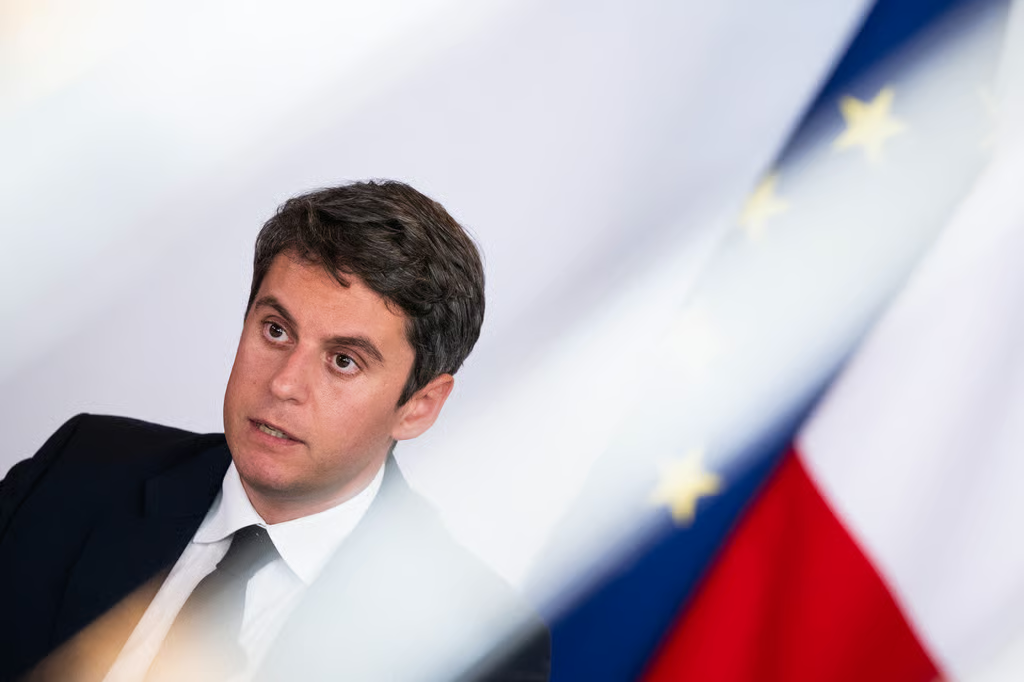
French presidential candidate Gabriel Attal reiterated his call to grant the government power to selectively block access to social media platforms to quell riots in the aftermath of widespread unrest across France over the weekend.
“You have young people at home who see their friends going out to loot, which gives the impression that they’re getting away with it; they see them on social media, and then they go out too,” Attal said in an interview with French radio station RTL.
Attal, a former prime minister who now leads French President Emmanuel Macron’s political party, said the measures must be “temporary” and “limited to the area where the riots are taking place.”
Saturday saw hundreds of thousands of protesters take to the streets nationwide across France, with students — who have been blockading schools in recent weeks to call for better study conditions, more teachers and more funding — joining trade unions and members of the public to protest the cost of living. While many protested peacefully, scenes of extreme violence also played out across the country. According to the latest figures from the interior ministry, some 2,000 people were arrested during the turmoil.
During Attal's tenure as prime minister in 2024, France blocked TikTok access to one of its overseas territories, New Caledonia, amid widespread protests there. But France’s highest administrative court ruled that this suspension constituted “a disproportionate infringement of rights and freedoms.”
It’s unclear whether Attal’s latest proposal would survive a judicial review given that over the summer, France’s Constitutional Council, which reviews the constitutionality of French legislation, blocked a bill seeking to ban access to social media for under-15s after finding the legislation disproportionately infringed on minors’ right to freedom of expression and communication.
Such internet restrictions are more commonly associated with countries like China, Iran, Russia and, more recently, India. These countries either have permanent blocks on certain social media platforms or have more recently restricted them during protest movements, with India and Iran going so far as to block internet access completely.
Klara Durand contributed to this report.
The pause comes ahead of a proposed expansion of the EU border agency’s role in returns, sharpening questions over how Brussels will fund its tougher deportation policy.
The U.S. military is planning to broadcast a public execution on Dec. 3, but violent content must be moderated by social media platforms under EU law.
The Trump administration was bothered by panels that referred to the U.S. as a disinformation threat.
Fifty European Union lawmakers, including 46 women, have been the targets of deepfake pornography, according to new research released Monday. The number of women targeted by deepfake …