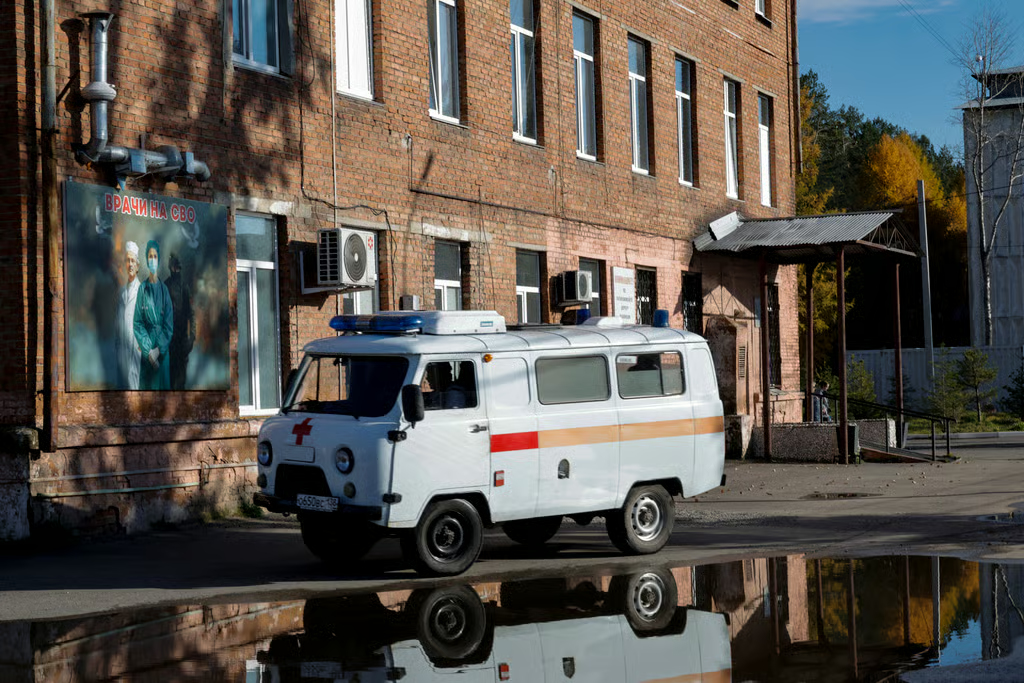
Russia’s response to a suspected plague case reveals weaknesses in the system designed to prevent infectious disease outbreaks from spreading.
AI generated Text-to-speech
A case of pneumonia that killed a lab worker at an anti-plague institute in Russia has exposed cracks in the international rules meant to keep the world safe from pandemics and health threats.
At the center of the debate is the legally binding set of International Health Regulations laying out countries’ rights and obligations in public health emergencies that could cross borders. It is signed by 196 countries, including Russia, China and the U.S.
But there are questions over whether Russia properly followed these rules — namely, on timely and transparent information-sharing on a potential threat.
The case sparked not just international concern over Russia’s transparency, but also raised doubts over the efficacy of the international system in place to detect and promptly respond to health threats — including potential pandemics.
“If countries do not comply with the IHR, it becomes more likely for novel infectious diseases to spin out of control, potentially sparking the next pandemic,” Lawrence Gostin, law professor at Georgetown University and director of the World Health Organization Collaborating Center on National and Global Health Law, told POLITICO.
It also becomes more likely that other countries risk knee-jerk responses, like closing borders, if they feel they don't know all the facts, said Roojin Habibi, a professor at the University of Ottawa.
“If states decide not to play by the rules, then of course the International Health Regulations are less effective," she added.
In the European Parliament's health committee, EU lawmakers raised concerns last week over the lack of transparency.
Independent lawmaker Ondřej Dostál suggested that poor diplomatic relations with countries like Russia risked hindering public health responses.
"[The] EU should, at least in areas of serious health concern, maintain at least some diplomatic relations with all countries, and act responsibly with other UN Member States to strengthen the emergency reporting mechanism," he said.
Lawmakers asked the EU and the WHO to fill the gaps left in the case.
The death of a 28-year-old employee at the Irkutsk Anti-Plague Institute of Siberia and the Far East earlier this month triggered unease across the globe due to her laboratory work — and a local Russian official linking her death to the plague.
The WHO, which leads global responses to major health threats, said it first learned of the death of the lab worker through media reports, rather than Russian health authorities.
On Oct. 3, it requested information to verify the reports and assess the potential scale of the threat. Under international rules, countries have 24 hours to respond to the WHO; Russia took three days.
Moscow said no case of plague has been registered recently in the Irkutsk region, confirming that it had conducted an epidemiological investigation and determined the patient died from “pneumonia of undetermined etiology.”
The case appeared open-and-closed for Russia. The disease agency announced it had concluded health inspections and there was no “epidemic risk” in the region.
But the WHO says many questions still remain unanswered, including the cause of the pneumonia that killed the lab worker at the anti-plague institute and how she was exposed.
Article 6 of the International Health Regulations obliges countries to assess public health events and notify the WHO about those that “may constitute a public health emergency of international concern” within 24 hours.
For some diseases — like smallpox and severe acute respiratory syndrome, or SARS — countries must immediately notify the WHO.
In other cases, countries may decide to notify the WHO — if, for example, an outbreak is unusual, unexpected, or there's risk of international spread. All “clusters of cases of severe, acute respiratory disease of unknown or novel cause” must be evaluated.
In the Russian pneumonia case, if no one else was infected, Moscow could have determined it wasn't necessary to notify the WHO, Habibi said. Still, the regulations encourage countries to keep the WHO informed about public health risks, particularly when there are uncertainties — this is stated in Article 8.
“In law, we have a distinction between must and should. There is a 'should' obligation under Article 8,” said Habibi. “It is highly encouraged, it is good practice, it is moral to do so. But is it a strict legal requirement? Potentially, one could argue that there is freedom here.”
But, in light of what the world experienced during Covid-19, “one could see how this was a lapse in judgment,” added Habibi, who is also a member of the Ottawa Center for Health Law Policy and Ethics.
Even if Russia did not comply with the requirements laid out by the rules, there is little the WHO can do.
“We are the secretariat of the member states, and we implement your wishes,” Abdirahman Mahamud, director of health emergency alert and response operations at the WHO, told members of the European Parliament last week.
“Whether it’s related to WHO implementing or policing the [International Health Regulations], we don’t have that power. IHR relies on the verification from the member state,” he said.
One thing the WHO can do is “publicly call out” countries that don't comply with the treaties, said Gostin — as it did in statements laying out the timelines and unanswered questions.
Another option is for states to multilaterally ramp up pressure.
“Countries like the United States should apply political pressure to ensure compliance,” said Gostin, adding that they have “a strong national security interest in ensuring compliance because of the risk of international spread.”
Over the past two weeks, the EU and the U.S. have both urged Russia to share more information on the case. “The whole world is waiting for the information from Russia,” European Commission spokesperson Eva Hrncirova said.
There are incentives for countries to adhere to the rules.
The International Health Regulations are designed to prevent nations from imposing punitive restrictions — such as travel bans — on countries that report outbreaks, therefore encouraging honest and transparent reporting.
“The grand bargain that the International Health Regulations sought to correct was that it aims to balance a robust public health response with honest reporting,” said Habibi. “It's an exchange. That's how the enforcement works.”
But if states decide not to play by the rules, the deal is less effective, she said. “You cannot fault other countries for taking very, very stringent measures to protect against the outbreak because they now don't trust the information that is being shared.”
The lack of tools to enhance compliance with the rules is “a major weakness,” said Gostin, adding it would be “more meaningful if it gave WHO a compliance-enhancing mechanism.”
But it’s hard to argue for stronger enforcement tools when the WHO has come under fire from large powers such as the U.S. for its handling of the Covid-19 pandemic, and is grappling with declining trust.
“If this was another moment in time in history, we could contemplate a stronger enforcement mechanism,” said Habibi.
“This is the best we have, and the best we can do in this climate.”
Moscow’s historical lack of transparency feeds concerns about the incident in Irkutsk.
Helen Clark warns that capitals need to boost health and social services to curb drug demand and help users.
Donald Trump will speak with Vladimir Putin about the situation after the U.S. urged Russia to share more information following the death of a lab worker.
“We are aware of the reports concerning the laboratory incident in Russia, seemingly involving a pathogen-causing plague,” says European Commission spokesperson.